by Desiree David on September 4, 2026, Friday
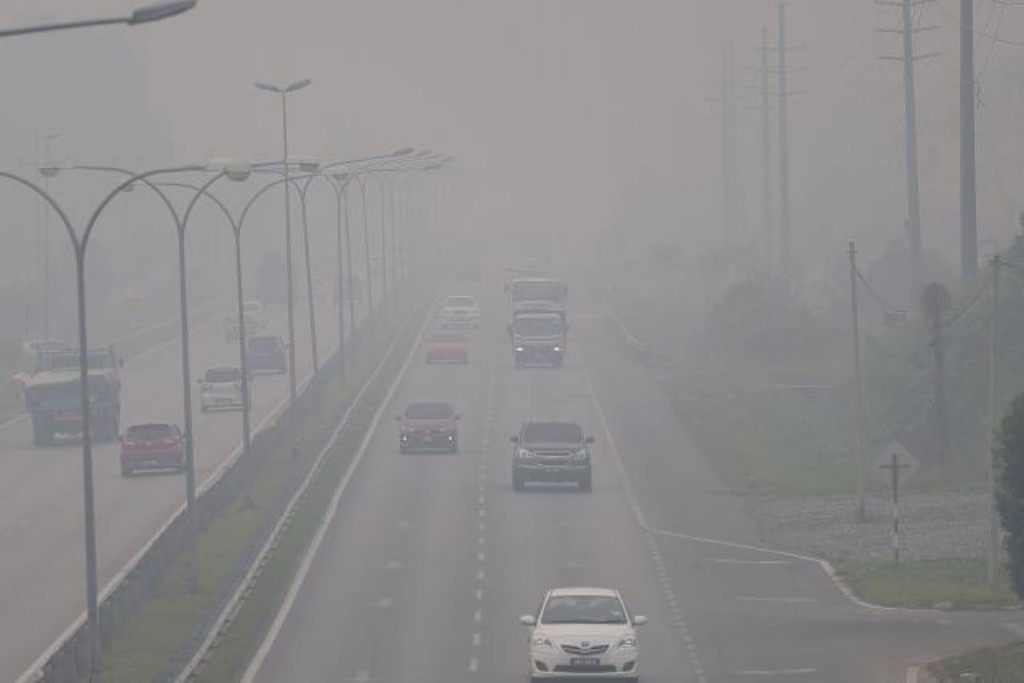
Haze blankets Serian after the API breaches 500 on Sept 4, 2026. – Bernama photo
KUCHING (Sept 4): The Yang di-Pertuan Agong Sultan Ibrahim has consented to the declaration of a state of emergency in the Serian Division following worsening haze that has pushed air pollution to hazardous levels.
The Prime Minister’s Office said the decision was made after taking into consideration the advice of Prime Minister Datuk Seri Anwar Ibrahim, Sarawak Premier Datuk Patinggi Tan Sri Abang Johari Tun Openg and relevant agencies monitoring air quality in the affected area.
“More effective measures will be taken to protect the health and welfare of affected residents,” it said in a statement.
According to the Department of Environment, the API reading for Serian had exceeded 500 from 8am this morning.
Sarawak Disaster Management Committee (SDMC) chairman Datuk Amar Douglas Uggah Embas said that under the National Haze Action Plan (NHAP), once a state of emergency was declared, government and private offices and other workplaces in the affected area — including industries, plantations, construction sites and quarries — would be required to close, except those providing essential services.
“Essential services include supermarkets, petrol stations, banks and a few other facilities.
“For government departments, these include the police, military and several other agencies that need to continue providing services to the public,” he told a press conference after chairing the committee’s meeting at Wisma Bapa Malaysia today.
The Deputy Premier said details on the areas in Serian that would be affected by the emergency, as well as the essential services that would be allowed to continue operating, would be announced after the declaration had been made.
“So we hope that when this emergency is enforced, the public will comply. The main strategy is to ensure that public health is protected. The health of the people is our priority.
“I also urge the people to cooperate and wear masks when going outside, particularly N95 masks or three-ply face masks,” he said.
On the standard operating procedures (SOPs) during the emergency, Uggah said the public should expect regulations that could differ from those imposed during the 1997 haze emergency in Sarawak, when Kuching was placed under a state of emergency after the API reached hazardous levels.
Responding to questions on why cloud seeding had not been carried out earlier to tackle the haze, Uggah reiterated that cloud seeding could only be conducted when atmospheric conditions were conducive.
“In other words, there must be clouds in the area so that they can be treated with the chemicals being used,” he said.
He added that the SDMC would continue taking proactive measures and closely monitoring the situation.
These include monitoring API readings and air-quality trends in Serian and other affected areas, as well as weather conditions and haze movement based on forecasts from the Malaysian Meteorological Department (MetMalaysia).
The committee would also coordinate public health and safety measures with relevant agencies and monitor hotspots and potential sources of haze.
It would also continue coordinating with the National Disaster Management Agency (Nadma), MetMalaysia, Royal Malaysian Air Force (TUDM) and Civil Aviation Authority of Malaysia (CAAM) on cloud-seeding operations.


